ETFE Greenhouse Film or Polycarbonate Sheets?
When building a new greenhouse or modernizing an existing one, one fundamental question always arises: glass, polycarbonate, or film? For decades, twin-wall polycarbonate sheets were considered a solid solution. Today, however, ETFE films such as NOWOGREEN® ET are setting new standards in greenhouse construction.
A closer look at the facts shows why switching to ETFE pays off for greenhouse operators.
ETFE vs. Polycarbonate: The Key Differences
A Self-Cleaning Surface That Reduces Operating Costs
One decisive advantage of ETFE over polycarbonate is its low surface tension, which gives the material self-cleaning properties. Dust and dirt hardly adhere to the surface and are largely washed away by rain, similar to the lotus effect. This also helps prevent algae growth, which must be repeatedly removed from polycarbonate sheets.
The self-cleaning effect of ETFE film ensures consistently high light transmission with low cleaning costs. To maintain high light output, polycarbonate sheets require regular cleaning.
Maximum Light Transmission for Higher Yields
Light transmission is one of the most important factors in professional greenhouse construction. Plants need as much natural light as possible to support efficient photosynthesis and achieve optimal yields.
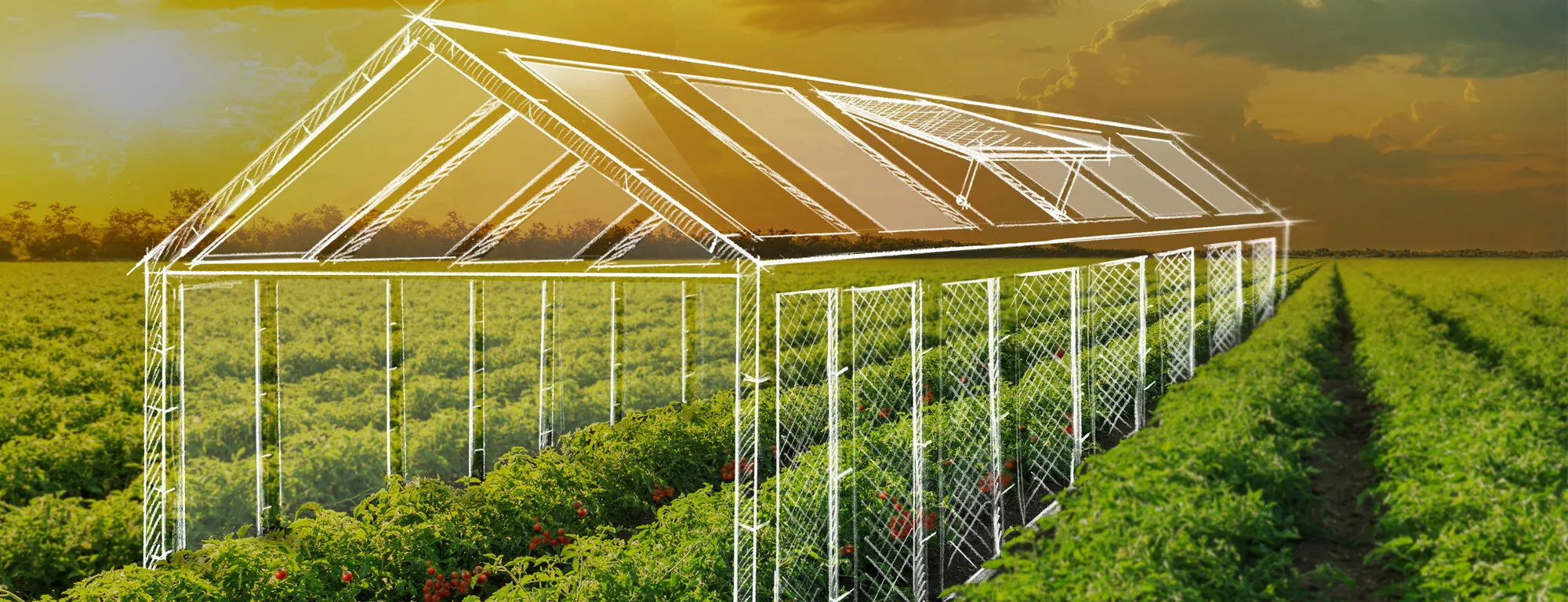
ETFE films achieve light transmission levels of 94% and retain these values almost unchanged for decades. Polycarbonate sheets, by contrast, continuously lose transparency due to UV exposure, surface ageing and dirt build-up.
Long Service Life for Long-Term Investment Security
ETFE film offers exceptional resistance to environmental stress such as hail, wind, UV radiation (which prevents yellowing) and chemicals. Both ETFE film and polycarbonate sheets are highly resilient and, compared with glass or PE film, offer high elongation at break. With an elongation at break around four times higher than polycarbonate, however, ETFE film is almost indestructible. Thanks to its high mechanical strength, ETFE film therefore offers a longer service life.
Efficient Condensation Management
Condensation can affect plant quality and promote fungal diseases. Modern ETFE greenhouse films such as NOWOGREEN® ET feature permanent anti-drop properties, preventing condensation from dripping onto plants and allowing it to drain away in a controlled manner.
The benefits:
- lower risk of disease and fungal infection
- improved plant quality as a result
- reduced pesticide use
- the option to reuse condensate water
Fully Recyclable
Sustainable greenhouse construction is becoming increasingly important. Thanks to its full recyclability, long service life, and low material use, ETFE film contributes to resource efficiency and a circular economy.
Recycling polycarbonate sheets is difficult due to their composition and processing, as multiple materials must be separated. NOWOGREEN® ET can be returned 100% to its original raw material.
Lightweight and Design Flexibility
ETFE films weigh only a fraction of comparable polycarbonate structures. This creates significant advantages and opens up new possibilities in construction:
- lighter supporting structures
- lower material costs
- simplified installation
- larger spans
- innovative architectural design options
Conclusion: Why ETFE Is the Future of Greenhouse Covering
The comparison between ETFE film and polycarbonate sheets clearly shows that modern ETFE systems outperform polycarbonate in many key areas.
ETFE offers:
- higher light transmission
- permanently transparent surfaces
- self-cleaning properties
- outstanding hail resistance
- lower maintenance costs
- a longer service life
- greater sustainability
- full recyclability
- higher cost-effectiveness across the entire life cycle
For operators, investors and planners focused on maximum yields, long-term cost-effectiveness and sustainable technologies, ETFE is therefore the future-proof alternative to polycarbonate sheets.

Contact Andreas Freutsmiedl directly
to discuss your next project:
Discover more blog posts

Interview with Andreas Freutsmiedl
Comparison of Greenhouse Films: ETFE vs. PE Film
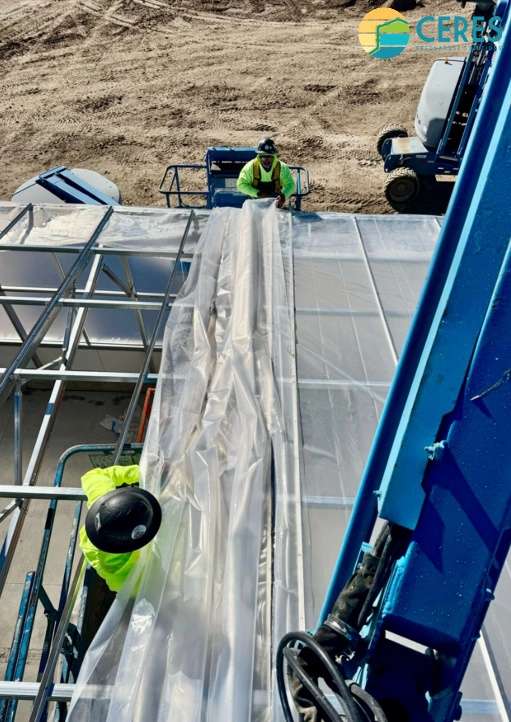
Good reasons to use ETFE instead of glass for your greenhouse
High-Performance films at NOWOFOL