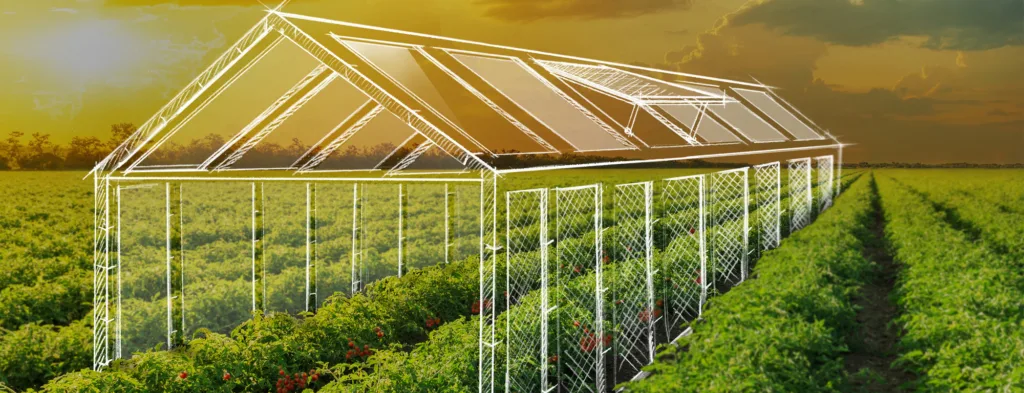
Comparison of Greenhouse Films:
ETFE vs. PE Film
Choosing the right covering is a crucial factor for the economic efficiency, durability, and productivity of greenhouses. Polyethylene film has been considered a cost-effective standard for decades, but ETFE film is technically and economically superior in many professional applications.
Acquisition Costs are an important reason why polyethylene is so popular and widespread as a greenhouse material.
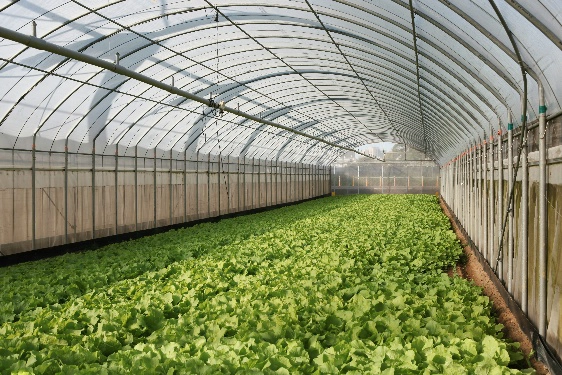
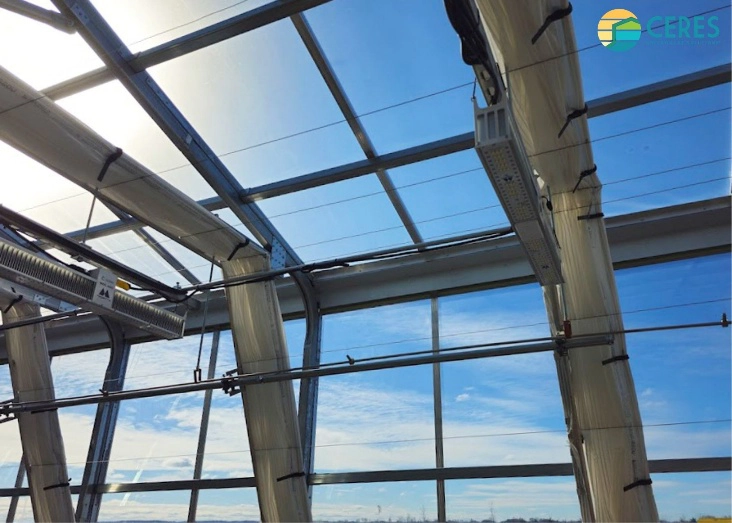
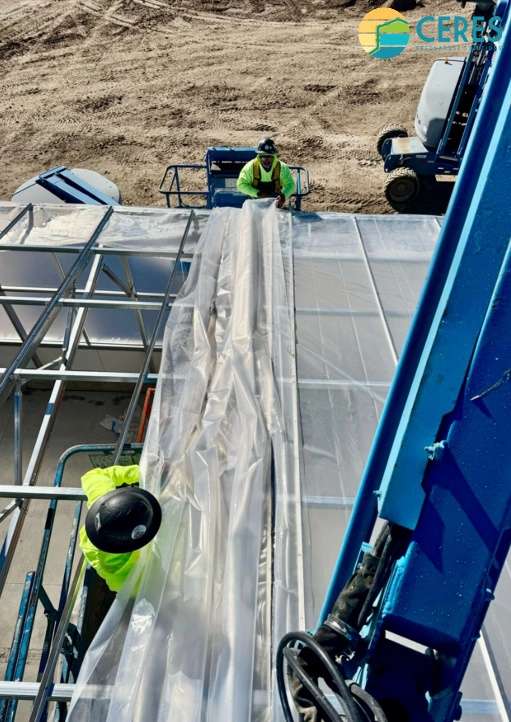
© Greenhouse by CERES Greenhouse Solutions
But is PE film really that much cheaper than ETFE film?
In the first year, this is certainly the case, as the acquisition costs for ETFE film are significantly higher. However, when considering the total costs, this investment pays off after just a few years.
Our architecture partner has developed a calculation tool that compares the ROI of ETFE and PE. The result: after only four years, the investment in an ETFE covering has paid off.
Why is that the case?
Operating Costs
1. Due to the short lifespan of PE film (1–5 years), costs for acquisition, installation and disposal add up. With a greenhouse made of ETFE film, like our NOWOGREEN ET, a film replacement is only required after at least 20 years. Within this period, a PE greenhouse (depending on weather conditions) will require at least four, but likely over 7 film changes.
2. Many film changes also mean many downtime periods, which in turn lead to harvest losses and therefore loss of income.
3. PE film must be cleaned regularly to ensure sufficient light transmission. ETFE film has self-cleaning properties, reducing cleaning costs to a minimum.
4. Maintenance and repair costs are also low with ETFE film, since it is significantly superior to PE film in terms of mechanical and chemical resistance.
– Resistant to hail, frost, and storms
– Unaffected by fertilizers and plant protection products
– Difficult to ignite and self-extinguishing in the event of a fire
Crop Yield
1. No other material has such a high light transmission (up to 95%) as ETFE film. This enables better photosynthesis and has positive effects on plant growth. By comparison, PE film is not UV resistant, so the film yellows quickly, which reduces light transmission.
2. With matt ETFE film, a uniform light distribution is achieved inside the greenhouse and prevents both direct sunlight, which could damage plants, and unwanted shadowing.
3. Furthermore, ETFE film allows UV rays to penetrate deeper into the plants. This means unwanted fungal growth is reduced and, as a result, the use of pesticides can be reduced.
4. Fungal growth can also occur due to condensation dripping onto the plants. This can only be prevented if there is an anti-drop coating – this is included in NOWOGREEN ET .
Sustainability
Both films have one thing in common: they are very lightweight and therefore do not require massive structures, such as those needed for a glass greenhouse. This reduces material consumption and transport emissions.
Unlike ETFE film, PE film loses not only stability due to its light weight, but also thermal insulation. Even as a multi-layer system, PE film has poorer insulation properties than glass, ETFE film or polycarbonate. NOWOGREEN ET can be used in multiple layers and offers very good insulation values, which leads to reduced heating costs and provides a stable climate in the greenhouse.
In summary, it can be said that ETFE film is far superior to a PE film solution ecologically:
– No waste, as it is fully recyclable
– Long lifespan saves many resources
– Energy efficiency through thermal insulation
– Facilitates reduction in pesticide use
Conclusion
For modern and professionally operated greenhouses, ETFE is, in most cases, not only technically superior but also the more economically sensible choice.
Where quality, planning reliability and operational safety are paramount, ETFE film is a strategically sound solution.
Contact our team for questions and advice about NOWOGREEN® ET:
Discover more blog posts

Interview with Andreas Freutsmiedl
Comparison of Greenhouse Films: ETFE vs. PE Film
Good reasons to use ETFE instead of glass for your greenhouse
High-Performance films at NOWOFOL